
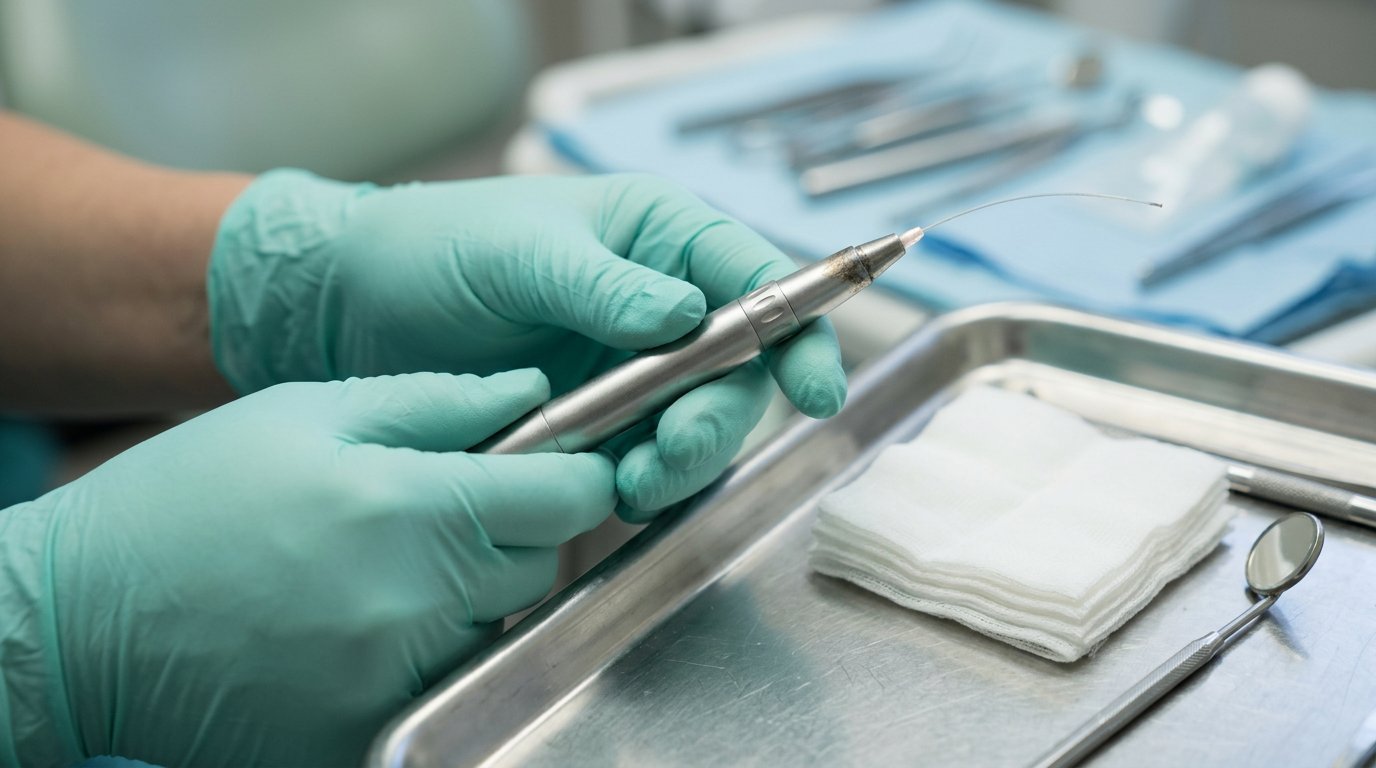
What Laser Gum Treatment Actually Does Differently
My gums bled a little when I flossed and I decided that was normal. That is more or less how gum disease gets a head start on people. Nobody ignores a tooth that hurts, and almost everybody ignores a bit of pink in the sink. I got most of what follows from a dentist near me at Hillsboro Dental Excellence (HillsboroDentalExcellence.com), an Oregon office that treats this with a laser rather than a scalpel, and the first thing they did was take the word surgery apart for me.
Because that word is doing a lot of the scaring here, and not much of the explaining.
If you have been told you have gingivitis, or you have heard the phrase deep cleaning thrown at you and nodded like you knew what it meant, this is the piece I wish somebody had handed me first. It is not a treatment plan. It is just an honest map of what is being talked about when a dentist starts talking about your gums instead of your teeth.
Gum disease is two problems wearing one name
The confusing thing about gum disease is that the early version and the late version get discussed in the same breath, and they are not really the same animal.
Gingivitis is the early one. Gums go red, they puff up a little, and they bleed when you brush or floss. That is bacteria sitting along the gum line and the tissue reacting to it. At this stage nothing structural has been lost yet, which is the good news buried in the bad news.
The part that gets skipped
Left alone, gingivitis can move into periodontitis, and that is the version people should actually be afraid of. Now the infection is under the gum line, working on the bone that holds your teeth in place. The gum pulls back off the tooth and leaves a pocket, the pocket collects more bacteria, and the pocket gets deeper. It is a loop that funds itself.
Bone does not grow back on its own because you started flossing. That is why the language changes once a dentist finds real pockets. Cleaning is no longer a hygiene appointment, it is an attempt to stop a slow demolition.
What a deep cleaning is, minus the euphemism
Deep cleaning is what your dentist says out loud. Scaling and root planing is what gets written down.
Scaling is scraping the hardened plaque and tartar off the tooth, including the part of the tooth below the gum line that a normal cleaning never touches. Root planing is smoothing the root surface afterward so the gum has something clean to reattach to, and so bacteria have fewer places to hide. You get numbed for it. It usually takes more than one visit, and your mouth is sore afterward.
Where the scalpel comes into it
For deeper pockets, scaling alone cannot reach the bottom. The traditional answer is gum surgery, which means the gum is cut and folded back so the dentist can get at what is underneath, the diseased tissue is removed, and then it all gets stitched closed again.
It works. It has worked for decades. But it is cutting and stitching, and cutting and stitching means bleeding, swelling, a real recovery, and a follow-up visit to take the sutures out. It is also indiscriminate in a way that bothers people once they think about it, because opening a flap of gum means disturbing healthy tissue on the way to the sick tissue.
What the laser is doing instead
Here is the version that finally made sense to me. A laser is not a smaller scalpel. It is a different tool with a different job.
Laser gum treatment uses light energy tuned to a wavelength that the diseased, infected tissue absorbs and the healthy tissue largely does not. So instead of a blade that cuts whatever it is pointed at, you have a beam that removes the infected tissue and leaves what is still healthy sitting right where it was. The office described that selectivity as the whole point, and once you have heard it, the difference is hard to unhear.
No blade means no stitches
The same energy that removes the tissue also seals as it goes and sterilizes the pocket while it works. That is why the laser version of this does not involve the bleeding and the suturing that a surgical flap does. Nothing was cut open, so nothing needs to be closed.
Recovery follows from that. Less tissue was disturbed, less of the mouth is angry about it afterward, and people are generally back to normal sooner than they would be after conventional gum surgery. That is not magic, it is just a smaller injury to heal from.
It also reaches places the tools cannot
The other thing lasers have going for them is geometry. A curved instrument in a narrow pocket can only go where the shape of the instrument allows. A beam of light can get into a corner that no hand tool was ever going to reach, which matters when the whole battle is about bacteria that live in exactly those corners.
The part nobody wants to hear
Whichever route you take, none of it is a cure you can buy and then forget about.
Gum disease is bacterial and your mouth does not become a sterile place after treatment. The pockets get cleaned out, the inflammation calms down, and then the maintenance is yours. Brushing, flossing, and going back for cleanings on whatever schedule your dentist sets are what determine whether you are doing this again.
I asked the obvious question, which is whether the laser makes the home care matter less. It does not. It changes what the treatment appointment feels like and how long you spend recovering from it. It does not change what happens along your gum line every single day after that.
What to actually ask
If somebody has told you that you need gum treatment, the useful questions are pretty short. Ask how deep the pockets are, because that number is what separates a rough cleaning from actual surgery. Ask whether laser therapy is an option for your case, because not every office has the equipment and not every case is a candidate. And ask what happens if you do nothing, because a dentist who will answer that one plainly is a dentist who is being straight with you.
The pink in the sink was the message. I just took a long time to open it.