How to Pick a Paving Company in Hamilton Without Getting Burned
You ever stand in your own driveway and really look at it for the first time in a while? I did that recently. The little cracks I had been stepping over for ages had finally joined up into one long split running down the middle, and the corner near the road had started shedding loose gravel every time a tire rolled over it.
My first move was the same one most people make. I searched, asked around, and within a day I had a stack of quotes that ranged so widely I genuinely could not tell who knew their craft and who was guessing.
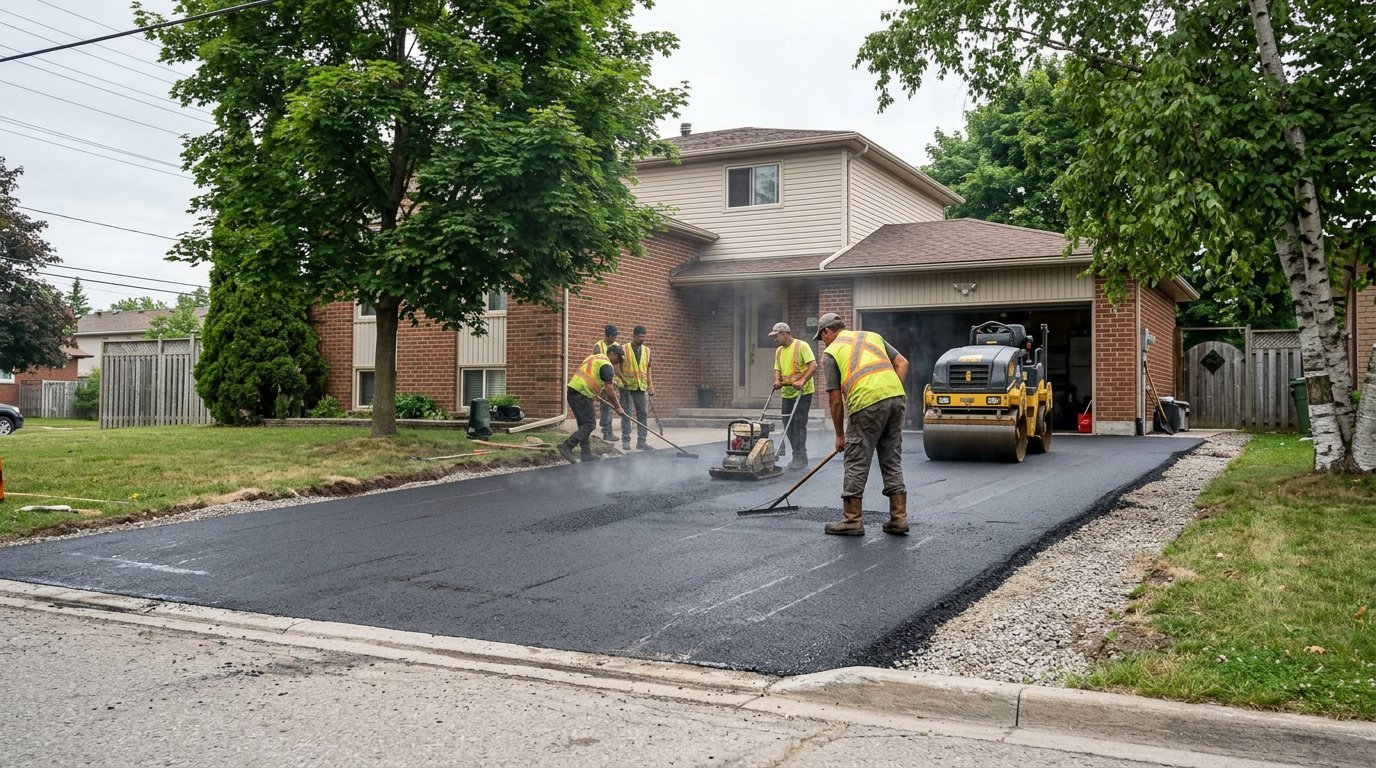
To get my head around it, I reached out to a few paving companies in Hamilton, and one of them, Hamilton Driveway Sealing, sat down and walked me through how a driveway job actually comes together, from the dirt up. That conversation changed how I read every quote after it.
So here is what I wish someone had told me before I started getting numbers thrown at me.
Why Hamilton is so hard on a driveway
Here is the part that surprised me. A driveway does not usually fail because of the asphalt on top. It fails because of what the ground underneath does to it.
And Hamilton’s ground does a lot.
The freeze-thaw problem nobody puts in the quote
We sit right next to Lake Ontario, which means lake-effect snow and a temperature that loves to bounce above and below freezing over and over.
Every time that happens, water trapped in or under the pavement freezes, expands, then melts and shrinks back. Do that cycle enough times and the surface gets pushed and pulled until it cracks. It is slow. It is relentless. And it is the single biggest reason a cheap driveway around here looks rough so fast.
A good crew builds for that movement instead of pretending it will not happen.
Clay soil holds water, and water is the real enemy
The other thing working against us is the soil. A lot of the lower city sits on heavy clay, and clay does something annoying. It grabs water and holds onto it.
Water sitting under your driveway has nowhere to go when the ground freezes, so it lifts and heaves the whole surface from below. That is why two driveways on the same street, paved the same week, can age completely differently. One had drainage figured out. The other did not.
When I understood this, the wild range in my quotes started to make sense. Some of them were pricing a real base. Some were pricing a thin layer of asphalt over a problem.
What actually goes under the asphalt
The black surface you see is maybe the least interesting part of the job. The stuff you never see is what you are really paying for.
The base is where the money quietly hides
Underneath the asphalt sits a layer of compacted gravel. That base spreads out the weight of your car and gives water somewhere to drain instead of pooling against the pavement.
A proper base on our clay soil can mean extra digging, extra material, and extra compaction, and yes, that can add a few hundred to over a thousand dollars to a job. The companies I spoke with were blunt about it. Skimp on the base and you are not saving money, you are just delaying the bill and adding interest.
That reframed everything for me. The cheapest quote was not cheap. It was incomplete.
Drainage is not something you add later
I always thought of drainage as a separate thing, like a French drain you bolt on if you have a problem. It is not.
Good drainage gets built into the grade of the driveway itself, the gentle slope that carries water off the surface and away from your house. Get the slope wrong and water sits, soaks in, freezes, and goes back to work on the asphalt.
Ask any paver how they plan to move water off your driveway. If the answer is vague, that tells you something.
Reading a paving quote without getting fooled
Once I knew what mattered, the quotes stopped looking like random numbers and started looking like different philosophies.
Why the lowest number is usually the most expensive one
A rock-bottom price almost always means a corner got cut somewhere you cannot see. A thinner asphalt layer. Less gravel. Skipped compaction. A grade nobody thought hard about.
It looks great for a year or two.
Then the cracks show up early, the edges crumble, and you are paying again far sooner than you should be. The people I talked to had all seen it a hundred times, usually when a homeowner called them to fix a job someone else did on the cheap.
Questions that separate the pros from the guy with a truck
I came away with a short mental checklist, and honestly it works for almost any trade.
How thick is the asphalt going to be, and how deep is the base? What are you doing about drainage and grade on my specific lot? Are you removing the old driveway fully or paving over it? Do you stand behind the work if it cracks early?
A real company answers these without flinching, because they think about them every single day. Someone dodging the questions is telling you they would rather you not ask.
You do not need to become an expert. You just need to hear how someone talks about the work.
The leftover asphalt knock at your door
This one is worth its own warning because it happens around here constantly.
A truck rolls up, the crew says they just finished a job nearby and have leftover hot asphalt, and they can do your driveway right now for a great cash price. It feels like luck. It is a setup.
That leftover asphalt is usually cold, thin, and laid over zero base prep on top of whatever was already there. It looks fine for a few weeks, then it falls apart, and the crew is long gone with no number that works and no warranty that means anything.
A legitimate paver schedules your job, gives you something in writing, and is happy to be looked up. Nobody doing real work needs to pressure you into deciding on the spot.
Get it in writing, and read what the warranty covers
A handshake and a cash price feel friendly until something goes wrong.
A real quote should spell out the asphalt thickness, the base depth, the square footage, whether old material is being removed, and what happens if the surface fails early. When all of that lives on paper, everyone knows what was promised.
Watch the wording on the warranty too. A short note about workmanship and early cracking means something. A vague promise that the driveway will last forever means almost nothing, because no honest paver controls how the ground moves or how you maintain it.
Ask how long the company has worked in the area, and whether they can point you to driveways they have done nearby. People who have built a name locally tend to protect it. They are still going to run into you at the grocery store, so the work has to hold up.
None of this is about distrust. It is just making the deal clear enough that nobody has to argue about it later.
Asphalt or interlock, and how to actually choose
People kept asking me if I was going to do interlock stone instead, and it is a fair question.
Interlock looks beautiful and lets water drain between the pavers, which our clay-heavy lots appreciate. It also costs noticeably more up front and can shift over time if the base was rushed.
Asphalt is cheaper, faster to install, and flexes with our freeze and thaw instead of fighting it, which is a big reason it holds up well in this climate. The trade-off is the upkeep, since it needs sealing and the occasional crack fill to go the distance.
For most driveways here, asphalt is the practical pick.
If you want the look of stone and have the budget, interlock is a fine choice, just hold whoever installs it to the same base-and-drainage standard you would demand for asphalt. The material on top matters less than the work underneath. That theme keeps coming back, doesn’t it.
Roughly what it costs, and where the money goes
Let me give you real numbers, because vague pricing helped nobody.
Asphalt paving in our area tends to land somewhere around four to six dollars a square foot. If you have an old driveway that needs tearing out first, removal often runs another five hundred to fifteen hundred depending on size and what is under there. And that heavier base prep our clay demands can tack on another five hundred to twelve hundred.
A bigger lot, a steep grade, or poor access for the equipment can all nudge those numbers up too. None of that is padding. It is just the job being honest about your particular driveway.
So two quotes for the same driveway can differ by a lot and both be honest, because they are quietly doing different amounts of work.
The point is not to chase the lowest figure. It is to understand what each number actually buys, then pick the one that covers the parts you cannot see.
That is the whole game.
Keeping it alive once it is down
A new driveway is not a finish line. It is more like a car. Treat it right and it goes the distance, ignore it and it ages fast.
Sealcoating, cracks, and the long payoff
Every few years, a fresh coat of sealer protects the surface from water, sun, and the constant freeze and thaw. It is cheap compared to repaving, and it buys you years.
Small cracks are worth filling the moment you notice them, before water finds its way in and does the rest. A crack is just a door for water, and water is the thing wrecking everything in the first place.
Do those two simple things and a well-built asphalt driveway around here can hold up for fifteen to twenty years.
Skip them, and you are back to standing in your driveway wondering where it all went wrong.
So if you are about to get this done, slow down for a second. Get a few quotes, sure, but read them for what is underneath instead of only the number at the bottom. Ask the boring questions about base and drainage. The right company will be glad you did, and your driveway will quietly thank you for years after everyone has forgotten the price.