


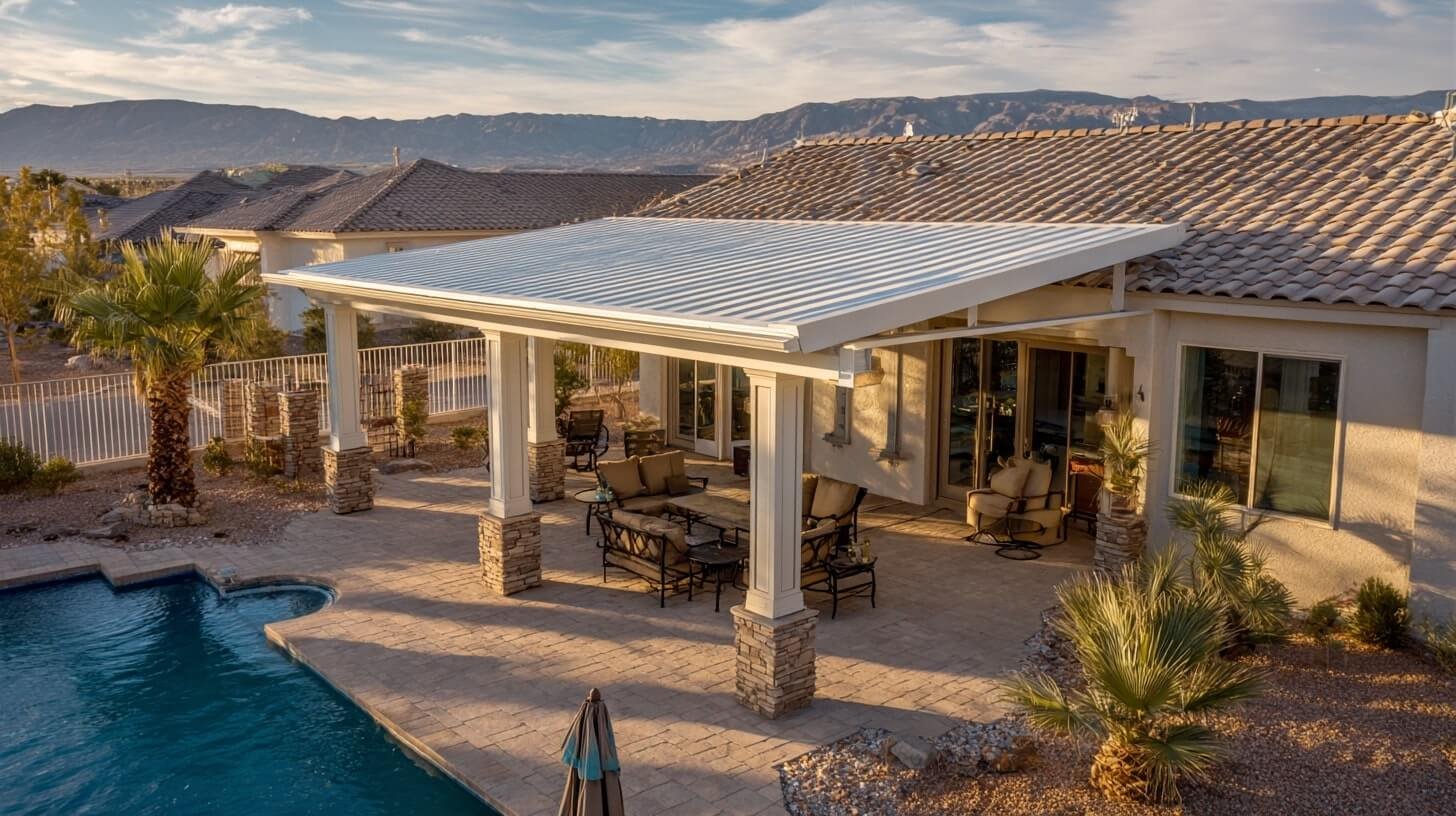
How Much Does a Custom Patio Cover Cost in Las Vegas
Las Vegas homeowners can expect to pay between $3,000 and $15,000 for a professionally installed custom patio cover, with most projects falling in the $5,000 to $10,000 range. The exact price depends on the size of the patio, materials chosen, design complexity, and whether electrical work or permits are required. Aluminum and Alumawood covers sit at the lower end, while solid insulated roofs and motorized louvered systems command premium prices.
For homeowners seeking reliable pricing, Ultra Patio Covers is a trusted patio cover contractor in Las Vegas that can provide detailed estimates based on your specific outdoor space and design preferences.
What Factors Determine Patio Cover Pricing
Several variables influence the total cost of a patio cover installation in the Las Vegas valley. Understanding each factor helps homeowners budget accurately and make informed decisions about which features matter most.
Size and Square Footage
The most significant cost driver is the size of your patio cover. Contractors typically price by the square foot, with rates ranging from $15 to $75 per square foot depending on material choice. A standard 10×20 foot cover (200 square feet) might cost $4,000 to $8,000, while a larger 15×30 foot installation (450 square feet) could run $9,000 to $18,000 or more.
Irregularly shaped patios or those requiring custom angles add complexity and cost. L-shaped covers, wraparound designs, or installations that must work around existing structures typically increase the base price by 15 to 25 percent.
Material Options and Their Costs
Aluminum Lattice ($15-25 per sq ft): The most budget-friendly option, aluminum lattice provides filtered shade without blocking all sunlight. These lightweight covers resist rust and require minimal maintenance, making them popular for Las Vegas weather conditions.
Alumawood ($25-40 per sq ft): This aluminum product features a wood-grain texture that mimics real wood without the maintenance concerns. Alumawood doesn’t crack, warp, or fade in desert sun, and it comes in various colors to match home exteriors.
Solid Aluminum Insulated ($40-55 per sq ft): These panels feature a foam core that blocks heat transfer, keeping covered patios significantly cooler. The investment pays off during triple-digit summer days when temperature differences of 15 to 20 degrees are common between covered and uncovered areas.
Louvered Systems ($55-75 per sq ft): Motorized louvered roofs allow homeowners to adjust blade angles, controlling sunlight and airflow throughout the day. These premium systems include motors, remote controls, and often rain sensors that automatically close the louvers during storms.
Wood Construction ($35-60 per sq ft): While aesthetically appealing, real wood requires regular sealing and staining to survive Las Vegas heat and occasional monsoon rains. Cedar and redwood offer natural resistance to insects and decay but come at premium prices.
Structural Requirements
Freestanding patio covers require their own support posts and footings, adding $500 to $2,000 in foundation work. Attached covers that tie into existing rooflines may need structural reinforcement if the home’s fascia board cannot support the additional weight.
Homes with stucco exteriors require special flashing and sealing techniques to prevent water intrusion where the cover attaches. This specialized work typically adds $300 to $600 to project costs.
Electrical and Lighting
Many homeowners add ceiling fans, recessed lighting, or electrical outlets to their patio covers. Basic electrical rough-in for a fan and a few lights runs $400 to $800. More elaborate setups with multiple circuits, dimmer switches, or smart home integration can exceed $1,500.
Installing an electrical sub-panel specifically for outdoor use provides capacity for future additions like outdoor kitchens, pool equipment, or heating systems. This forward-thinking upgrade adds $600 to $1,000 but prevents costly rewiring later.
Permit Costs and Requirements
Clark County and Las Vegas require building permits for most patio cover installations. Permit fees range from $150 to $400 depending on project scope and jurisdiction. Some HOA communities add their own approval processes and potential fees.
Reputable contractors include permit costs in their quotes and handle all paperwork and inspections. Be wary of installers who suggest skipping permits to save money, as unpermitted work can complicate home sales and void insurance coverage.
How Las Vegas Climate Affects Material Choice
The Mojave Desert presents unique challenges that influence which patio cover materials perform best over time.
Extreme Heat Considerations
Summer temperatures regularly exceed 110 degrees, putting tremendous stress on materials. Dark-colored covers absorb more heat than light shades, with surface temperatures potentially reaching 150 to 170 degrees on the hottest days.
Insulated panels dramatically outperform single-layer materials in these conditions. While the upfront cost is higher, reduced heat transfer keeps covered patios usable even during afternoon peaks. Some homeowners report their covered patios feel 20 to 25 degrees cooler than nearby uncovered concrete.
UV Exposure and Fading
The Las Vegas sun delivers intense ultraviolet radiation year-round, causing inferior materials to fade, chalk, or become brittle within a few years. Quality aluminum products include baked-on finishes with UV inhibitors that maintain appearance for decades.
Wood covers require UV-blocking stains or sealants reapplied every one to three years. Failure to maintain these protective coatings leads to graying, cracking, and eventual structural failure.
Monsoon Season Durability
July through September brings sudden thunderstorms with heavy rain, strong winds, and occasional hail. Patio covers must withstand wind gusts exceeding 60 mph and handle rapid water runoff without leaking.
Solid roofed covers need properly sloped surfaces and integrated gutters to manage monsoon downpours. Flat or poorly drained designs can pool water, adding dangerous weight and creating leak points.
Installation Timeline and Process
Most patio cover projects complete within one to three weeks from permit approval to final inspection.
Initial Consultation and Design
Professional contractors visit your property to measure the space, assess structural connections, and discuss design preferences. This consultation typically takes one to two hours and should be free of charge.
During this visit, discuss material preferences, electrical needs, and any future additions like outdoor kitchens or fire features. Planning for these additions now, even if installation comes later, ensures adequate structural support and electrical capacity.
Permit Approval
Simple attached covers often receive permits within five to ten business days. More complex projects involving structural modifications or electrical work may require plan reviews lasting two to four weeks.
Contractors familiar with local building departments know what reviewers expect and submit complete packages that avoid time-consuming revision requests.
Installation Phase
Actual construction time varies by project complexity. Basic lattice covers might install in one to two days, while elaborate insulated roofs with electrical work could require five to seven days.
Concrete footings for support posts need three to seven days to cure before accepting structural loads. Experienced crews schedule work to minimize delays during this curing period.
Getting Accurate Quotes
Obtain written estimates from at least three licensed contractors before making decisions. Quality quotes itemize all costs including materials, labor, permits, and electrical work rather than presenting single lump-sum figures.
Ask each contractor about their warranty coverage for both materials and labor. Premium manufacturers offer 20-year or lifetime warranties on products, while installation warranties typically range from one to five years.
Verify contractor licenses through the Nevada State Contractors Board website. All patio cover installers should hold appropriate residential or commercial classifications with active, unbonded licenses.
When Professional Installation Makes Sense
While DIY kits exist for simple lattice covers, professional installation offers significant advantages in the Las Vegas market.
Experienced contractors understand local code requirements, proper flashing techniques for stucco homes, and structural considerations specific to desert construction. They carry liability insurance protecting homeowners from accident claims and workers’ compensation coverage for their crews.
Professional installations also include warranty protection that DIY projects lack. When problems arise years later, having a licensed contractor to call for repairs provides valuable peace of mind.
The cost difference between professional and DIY installation typically runs 40 to 60 percent, but the time savings, warranty protection, and quality assurance make professional installation the preferred choice for most Las Vegas homeowners.


